The Complete Microsoft DP-800 Certification Guide: Skills, Career Path, Exam Strategy, AI SQL Learning Roadmap & Practice Tips
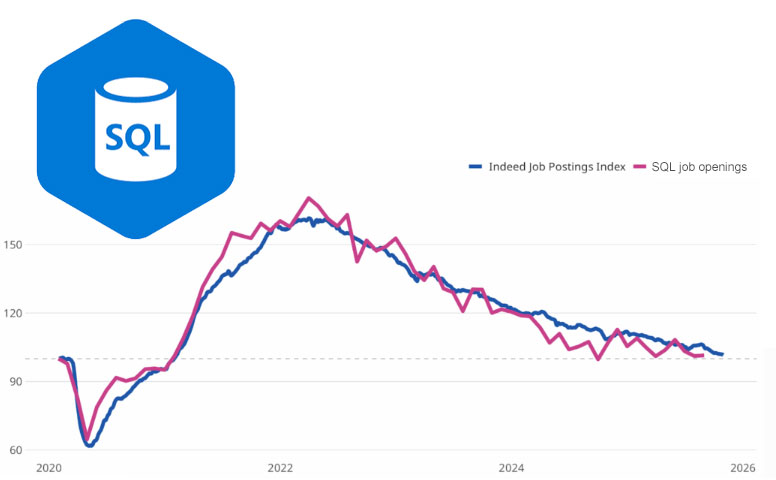
SQL hasn’t been replaced. It has been repositioned.
In most enterprise systems today, databases are no longer just storage engines. They sit inside applications that behave more like workflows of intelligence—search, recommendation, summarization, automation. Microsoft didn’t design DP-800 to redefine SQL. It emerged because SQL is already being used differently inside Azure and Fabric ecosystems.
The boundaries between databases, applications, and AI have become increasingly difficult to separate. Today, a SQL query may be one step inside a larger retrieval pipeline rather than the final destination.
DP-800 reflects that architectural shift more than it introduces something entirely new.
And that’s where the real question begins—not what the exam contains, but what kind of work it now reflects.
🌍 The Quiet Shift Most SQL Developers Notice Too Late
Five years ago, most SQL developers never had to think about embeddings. Today, many are already working inside systems that rely on them indirectly, even if they don’t realize it.
A legacy SQL Server system in a bank gets modernized into Azure SQL. At first, nothing dramatic changes—just migration work. But slowly, that same system starts feeding an internal Copilot that answers employee queries about transactions, policies, or risk flags.
The database hasn’t changed its nature. Its role has changed.
This shift didn’t arrive with a big announcement. It came through incremental architectural decisions: adding APIs, integrating search layers, introducing AI-assisted retrieval.
DP-800 reflects this quiet transition more than it defines it.
👥 Who Actually Benefits from DP-800 Without Overthinking It
The certification tends to make sense for people who are already close to production data systems.
Not necessarily experts. But people who have seen real constraints.
That might be:
- A SQL developer maintaining ERP databases that are now being exposed to AI copilots
- A data engineer moving pipelines from on-prem SQL Server to Azure
- A backend engineer integrating structured data into API-driven services
- Someone working on analytics systems where SQL is no longer the final layer
There’s a subtle pattern here. DP-800 becomes relevant when SQL stops being “just a database skill” and starts becoming part of a broader system design conversation.
If that shift hasn’t happened in your work yet, the certification will feel slightly out of context.
🧠 Why Passing DP-800 Doesn’t Automatically Change How You’re Seen
Certification has always had a signaling problem.
In enterprise teams, DP-800 rarely changes how colleagues see you immediately. What it does is reposition you slightly in future conversations.
You’re no longer only “the SQL person.” You become someone who can participate in discussions about retrieval, AI integration, and system design trade-offs.
But that shift is fragile.
In interviews, the difference becomes obvious quickly. Some candidates describe vector search confidently but struggle when asked a simple design question:
When would you avoid semantic retrieval even if it improves relevance?
That’s usually where certification ends and practical reasoning begins.
Passing DP-800 gets you into the room. How you think determines whether you stay relevant in that room.
🧩 A Small Scenario That Explains More Than the Exam Outline Ever Could
Imagine an internal IT support system inside a manufacturing company.
It starts simple: SQL Server stores incident tickets and resolutions.
Then the system evolves:
- Engineers want to search past incidents using natural language
- Support staff want AI-generated troubleshooting steps
- Management wants trend analysis across failure types
So the architecture shifts quietly:
SQL still stores structured incident data.
But embeddings are added for semantic retrieval.
And an AI layer sits on top, generating responses based on both.
Nothing in this system is “pure AI” or “pure database.” Everything is blended.
At some point, someone has to decide:
Should a query come from SQL filtering or semantic similarity?
That decision is no longer technical trivia. It becomes system behavior design.
DP-800 sits exactly in this type of moment.
⚙️ SQL Is No Longer the Whole Job
SQL used to be enough to describe a job role.
That assumption no longer holds.
In modern Azure environments, SQL is often only one layer in a larger pipeline:
- Structured data lives in relational tables
- Context is derived through retrieval logic
- AI models generate responses using that context
A query is no longer just executed. It is interpreted.
This changes how engineers think about correctness. A query can be “technically right” but still produce poor AI outcomes if the retrieval context is wrong.
That nuance is where traditional SQL thinking starts to stretch.
🧭 Why DP-800 Feels Neither Beginner Nor Advanced
DP-800 sits in an uncomfortable middle.
It assumes you already understand SQL well enough to not think about it constantly. But it also introduces ideas—vector search, embeddings, hybrid retrieval—that don’t behave like traditional database concepts.
This is why different people experience the same material differently.
For some, it feels like an extension of familiar systems. For others, it feels like stepping into an adjacent discipline without full context.
Both experiences are valid. They simply reflect different starting points.
🧠 Learning DP-800 in the Right Order Changes Everything
Most preparation mistakes don’t come from lack of knowledge. They come from disordered learning.
If someone starts with vector search concepts before understanding relational constraints, everything feels abstract. If they start with CI/CD pipelines without understanding data modeling, everything feels procedural but disconnected.
The sequence that tends to work more naturally looks unstructured at first:
You notice relational systems first.
Then you notice their limitations.
Then you start seeing where semantic retrieval fits.
Then AI integration stops feeling like a separate topic.
It doesn’t feel like studying. It feels like recognizing patterns you’ve already encountered.
⚖️ The Certificate Opens Doors. Your Thinking Keeps Them Open.
In hiring discussions, DP-800 rarely appears as a requirement. It appears more as context.
What matters is not the certification, but the type of thinking it implies.
Can the candidate reason about system behavior under mixed workloads?
Can they understand trade-offs between structured and semantic retrieval?
Can they design systems where SQL is part of an AI pipeline rather than isolated storage?
Those are the real evaluation points.
Certification is only a hint. Not evidence.
🚧 Why Most Preparation Feels Misleadingly Structured
Preparation materials often present DP-800 as a set of domains:
SQL skills
Security
Performance
AI integration
But real systems don’t separate like that.
A performance decision might affect AI response quality.
A security constraint might change retrieval design.
A schema decision might influence embedding accuracy.
Everything overlaps.
That overlap is where most candidates either adapt or struggle.
🧭 A More Realistic Way to Think About Career Impact
DP-800 doesn’t create a new job category.
It slightly shifts how existing roles evolve.
A SQL developer becomes someone who can participate in AI-enabled system discussions.
A data engineer becomes more aware of retrieval logic.
A backend engineer starts thinking about structured data as context, not just storage.
The shift is gradual. Not visible immediately. But noticeable over time.
🧭 Study Resources That Fit the Reality of the Exam
Microsoft Learn remains the most reliable foundation because it reflects how Microsoft expects these systems to behave in Azure environments.
Most experienced candidates naturally combine documentation with practical exploration in Azure SQL or Fabric environments to see how concepts behave under real constraints.
Some also use supplementary practice material such as Leads4Pass (https://www.leads4pass.com/dp-800.html), but typically only after they already understand the system design ideas. It works better as a calibration tool than a learning source.
🧭 The Subtle Reason DP-800 Will Age Differently Than Other Certifications
Some certifications age quickly because they are tied to specific features.
DP-800 is different because it is tied to a direction.
Databases are becoming part of AI systems.
SQL is becoming part of retrieval pipelines.
Data systems are merging with application intelligence layers.
Even if Azure services evolve, that direction is unlikely to reverse.
🧭 What This Certification Really Reflects
SQL is not disappearing. But it is no longer isolated.
It now sits inside systems that behave differently than traditional databases were designed for.
DP-800 reflects that transition—not by defining it, but by existing inside it.
And whether you choose to pursue it or not, the shift it represents is already present in many real systems today.
Five years ago, most SQL work stayed within clear boundaries.
Today, those boundaries are softer, sometimes invisible.
Whether you earn DP-800 or not, that quiet change has already become part of the job.
Author